



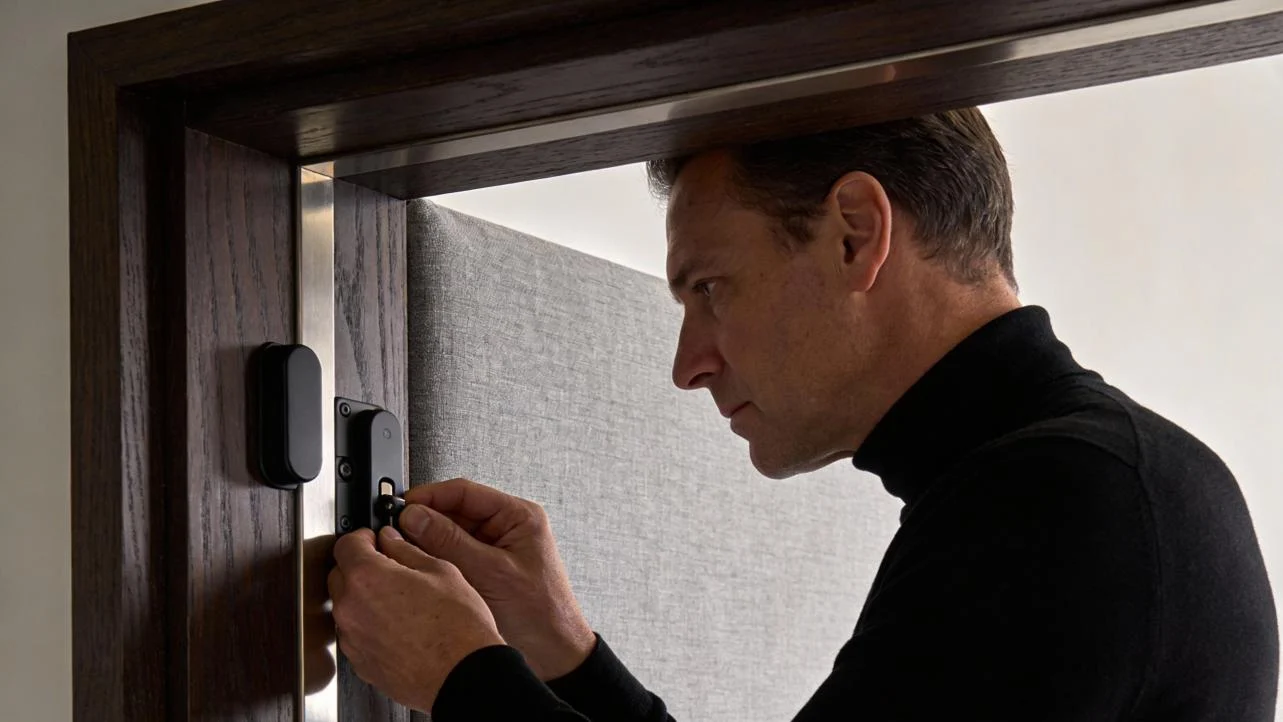
A magnetic lock is designed to secure a door by using an electromagnetic field. When power is supplied, the magnet holds a metal armature plate against the door. When the authorized release signal removes power, the magnetic field should disappear and the door should open.
When a magnetic lock refuses to release, the problem is usually related to the release circuit, controller, power wiring, or mechanical contact rather than simply being a defective magnet. Because these locks are often installed on access-controlled and emergency exit doors, troubleshooting should be approached carefully.
Start by Identifying the Exact Problem
Before changing anything, determine what happens when you try to release the door.
Does the reader approve access but the door remain locked? Does the exit button fail to release it? Does the lock eventually release after several seconds? Or does it stay magnetically attached even after power should have been removed?
These details help separate a control-system problem from a mechanical release problem. If the door is part of an emergency exit route and normal egress is impaired, treat the issue as a safety problem and use the appropriate emergency procedure rather than attempting to force the door open.
Check the Release Device First
A common cause is a problem with the device that is supposed to initiate unlocking. Depending on the installation, this could be a request-to-exit device, push-to-exit button, access reader, keypad, card system, or access-control panel.
Try the approved release methods available for the door. If one method releases the lock while another does not, the magnetic lock itself may be functioning correctly. The fault could instead be in the particular button, reader, relay, wiring, or programmed access-control sequence.
Avoid randomly disconnecting wires or bypassing the release system. Doing so can interfere with emergency-release functions and make the original problem harder to diagnose.
Inspect the Power and Control Circuit
Magnetic locks normally remain locked while they receive electrical power. Releasing the lock requires the appropriate circuit to interrupt that power. Therefore, if the lock continues receiving power after an authorized release command, it can remain firmly locked.
Potential causes include a failed relay, incorrect wiring, a controller malfunction, a stuck release circuit, or a problem with the power supply arrangement.
A qualified technician can test whether the lock is still receiving voltage when a release command is given. If power remains when it should have been interrupted, attention should move toward the controller, relay, release device, and wiring rather than immediately replacing the magnet.
Look for Residual Voltage
Sometimes a magnetic lock does not release immediately because electrical energy remains in the circuit after the release command.
Certain electromagnetic locks can experience residual electrical effects when their power is removed. Installation documentation for some models specifically identifies release delays caused by an incomplete interruption of the DC circuit or incorrectly installed suppression components.
This is not something to correct by randomly removing components. The technician should follow the manufacturer’s wiring diagram and verify that the release circuit is switching the correct part of the DC circuit.
Examine the Armature Plate
Although a lock that will not release is commonly an electrical or control issue, the physical relationship between the magnet and armature plate can also contribute to sticking.
The armature plate is designed to make proper contact with the magnet while allowing a degree of movement for alignment. If it has been installed too tightly, is distorted, or is not sitting correctly against the magnet, the door may be difficult to release. Manufacturer troubleshooting instructions commonly emphasize correct armature alignment and mounting.
Do not simply tighten every screw as much as possible. The correct mounting arrangement depends on the particular lock and door.
Clean the Contact Surfaces
Dirt, paint, rust, metal particles, or other debris between the magnet and armature can affect how the two surfaces meet.
With the system safely isolated and following the manufacturer’s maintenance instructions, the contact surfaces can be inspected and cleaned. Some manufacturers recommend keeping these mating surfaces clean and checking mounting hardware periodically.
Cleaning is more likely to solve poor holding force than a true electrical release failure, but it is still an important part of maintaining a reliable installation.
Check the Door for Mechanical Problems
A door can create problems even when the electrical system is working correctly.
Sagging hinges, a warped door, loose mounting brackets, excessive friction, or changes to a door closer can alter the position of the armature plate. A door that has shifted over time may no longer move freely after the magnet releases.
Check whether the door itself swings or moves normally without excessive resistance. If the door binds against the frame, fixing the magnetic lock alone may not solve the problem.
Review the Access-Control Controller
If the release button and reader appear to operate normally but the lock remains energized, the access-control controller deserves attention.
The controller may be programmed with an incorrect release duration, may have a failed relay, or may not be responding correctly to the access request. A technician can review controller events and test the relay output to determine whether the unlock command is actually reaching the lock.
This is especially important when the door works intermittently. An intermittent problem may indicate a failing relay, loose connection, power-supply issue, or damaged cable rather than a permanently defective magnetic lock.
Do Not Ignore Emergency-Release Functions
Magnetic locks used on exit doors require properly designed release arrangements. Depending on the building and installation, these may involve request-to-exit devices, emergency-release equipment, fire-alarm interfaces, access-control systems, and power-loss behavior.
A malfunctioning lock on an escape route should never be treated as an ordinary hardware inconvenience. A professional should verify that the door can release through the required safety paths before the system is returned to normal service.
When the Magnetic Lock Itself May Be Faulty
After the release circuit, controller, wiring, power supply, and mechanical installation have been checked, the lock assembly itself may need attention.
Possible hardware problems include a damaged coil, internal electrical failure, overheating, or other component damage. Some manufacturers recommend replacing the complete magnetic lock assembly rather than attempting to replace individual internal boards or components.
A qualified technician should determine whether repair or replacement is appropriate for the specific model.
A Simple Troubleshooting Sequence
A sensible troubleshooting sequence is:
- Confirm that the door should actually be releasing.
- Test the approved release device.
- Check whether the access-control system registers the release command.
- Determine whether power is still reaching the magnetic lock.
- Inspect the release relay and wiring.
- Check for mechanical interference and door alignment.
- Inspect and clean the magnet and armature contact surfaces.
- Check the armature mounting and alignment according to the manufacturer’s instructions.
- Test emergency and life-safety release functions.
- Replace the lock only after other likely causes have been eliminated.
This approach avoids replacing an expensive lock when the actual problem is a controller, relay, wiring connection, or door alignment issue.
Avoid Forcing a Stuck Door
Pulling aggressively on a door that is still magnetically locked can damage the door, frame, armature mounting, or access-control hardware. It can also create a dangerous situation if people are attempting to exit through the opening.
Likewise, do not bypass a magnetic lock’s release circuit simply to make the door open. If the door is an emergency exit or access-controlled opening, the correct release method needs to be restored rather than defeated.
When to Call a Professional
Professional assistance is appropriate when the lock remains energized despite a valid release command, electrical wiring needs testing, the controller or relay appears faulty, the door is part of an emergency exit system, or the installation requires changes to fire or life-safety interfaces.
Electrical measurements and changes inside access-control equipment should be performed by someone qualified to work on the system. If there is a burning smell, damaged wiring, overheating, or an impaired emergency exit, stop troubleshooting and follow the site’s emergency and service procedures.
Final Thoughts
A magnetic lock that will not release does not automatically mean the magnet has failed. The problem may be caused by continuous power, a faulty release device, controller or relay issues, wiring faults, residual voltage, armature alignment, or mechanical problems with the door.
The safest approach is to diagnose the entire release path instead of forcing the door or immediately replacing components. By checking the release command, power interruption, controller, wiring, armature, and door movement in a logical order, the underlying fault can usually be identified more efficiently while preserving the safety functions of the access-control system.
