



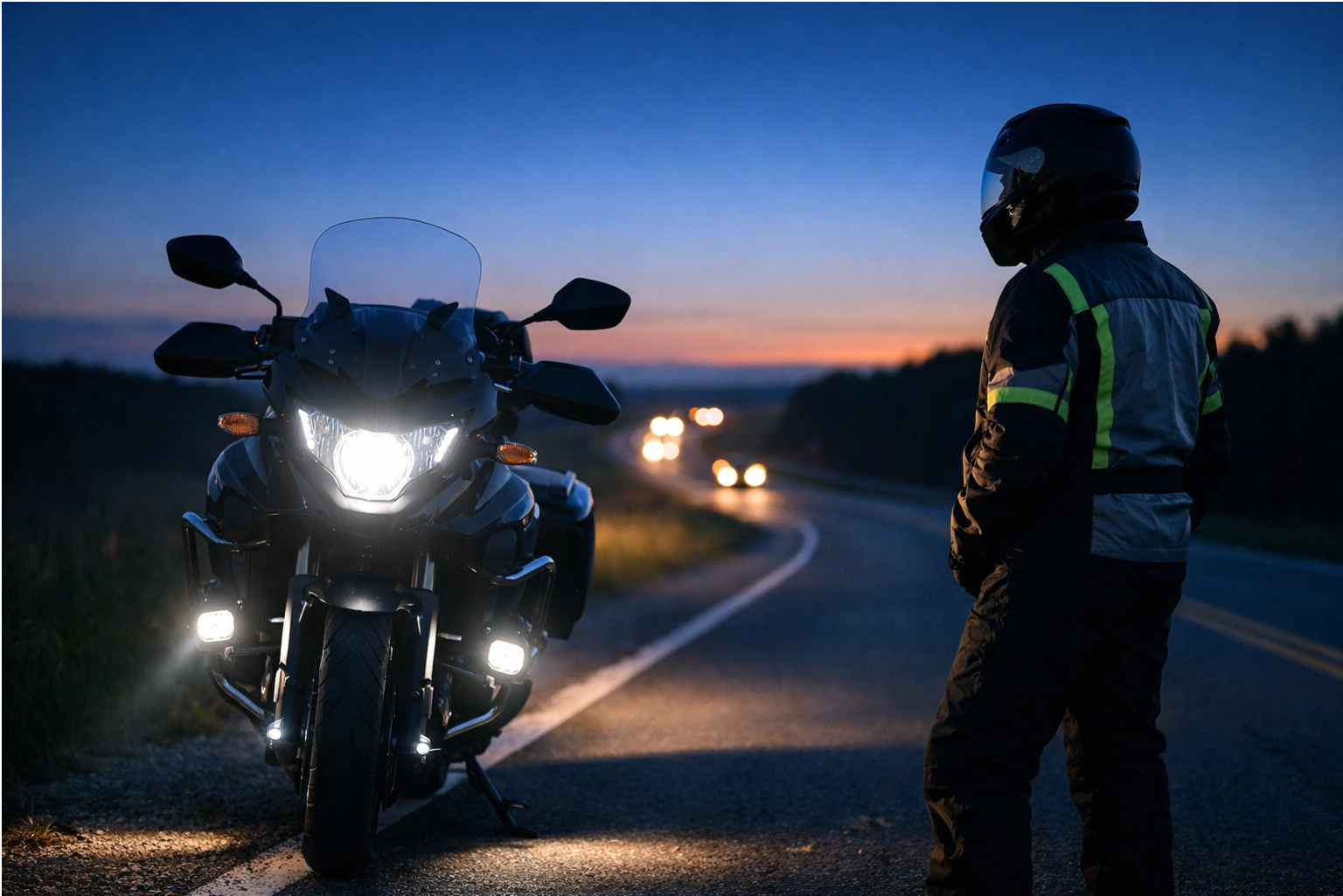
As the sun goes down the horizon and the shadows across the highway grow longer, the lighting system on your motorcycle becomes more than a mere accessory; it becomes your life line. Through many hours of wandering the city streets and the curvy country roads, I have discovered that it is not only about being able to see where you are going but also making sure that other people see you coming, which is why many riders check the latest upgrades on ShinyWing when evaluating visibility improvements.
The Importance of Visibility for Motorcyclists
The connection between visibility and motorbike safety is hard to overestimate. Motorcycles have a much smaller visual signature to other users of the road, unlike automobiles which are larger in profile and have larger light arrays. Such reduced presence poses a very unsafe situation as drivers tend to overlook oncoming riders until it is too late. The issue of this weakness is resolved by modern lighting technology which improves on the brightness, positioning, and smart design to provide maximum visibility on the road.
The old technologies of halogen bulbs that used to prevail in the motorcycle market have been replaced by new high-tech LED and HID technologies. These newer systems give much brighter light, and use a lower power consumption out of your bike electrical system. The change is more pronounced especially at dawn and dusk times when the visibility is difficult due to low ambient light levels. Upgrading riders are also known to complain that fellow motorists give them more space and are more aware of their presence.
Lighting Elements That Every Rider Is Supposed to Know About
The lighting architecture of your motorcycle comprises a number of systems that are interconnected and have different functions.
Headlights
The headlight is still your main source of forward light, as it cuts through the darkness and exposes hazards on the road, wildlife and bendings ahead. In modern headlights systems, the high and low beam configurations are common with some of the more advanced models having adaptive systems and can change the beam patterns depending on lean angle and speed.
Auxiliary Lights
Auxiliary lighting has been created as a game changer to the riders who often ride in low-light conditions. Such additional lights are attached to crash bars, engine guards or special brackets, and these lights light up peripheral sections with additional light. The additional visibility will be invaluable at times of driving through unexplored ground or searching the shoulder on the side of the road.
To give their bike a broader appearance in the eyes of the traffic, many riders mount additional lights so that their bike would seem bigger.
Turn Signals
Turn signals will be used as your main tool of communication with other vehicles around. Stock turn indicators are not always bright and visible in the urban setting where there is competition of visualization. Improved sequential or high intensity LED signal lights will make your intentions be heard by those around you and will tend to avoid unsafe merging problems or intersection crashes.
Brake Lights
Special attention should be paid to brake lights as they warn the traffic after the slowing of the traffic. Improved brake light systems have rapid-flash or several LED bulbs that increase in intensity on pressing the brake. This graduated response gives information to follow-up drivers in more finer details about how intense you have to stop so that they can moderate their own speed accordingly.
GL1800 2018+ Upgrades: Gold Wing Your Experience
Modifications and additions to the lighting of these touring machines are available as aftermarket products that have been specifically designed to fit well with the 2018 or newer models used by Gold Wing enthusiasts. GL1800 has large electrical capacity that facilitates massive lighting changes without interfering with battery life or charging system.
GL1800 2018+ upgrades are typically aimed at substituting factory lamps with more powerful ones that do not change the style of the motorcycle. The conversion of halogen headlight to LED offers light patterns of the headlight that are drastically better to provide crystal clarity of the road detail. With these systems, you normally consume a smaller amount of amperage than stock bulbs yet the light they emit is much brighter and as a result you can add additional lighting without straining your electric system.
Another type of lighting that is popular among GL1800 riders is running lights and accent lighting. These enhancements make you more visible during the day as well as adding unique visual experience that makes your motorcycle unique. Numerous riders have found that properly positioned running lights will give them a more commanding presence on the road and will make other road traffic consider safer distance and to be more careful with their lane changing.
Practical Implementation Factors and Best Practices
The process of lighting upgrades should be thoughtful as it is necessary to do more than buy the most bright products. The electric system of your motorcycle is limited in nature and when it is overloaded it may cause the charging system to fail or result in popping fuses at a bad time.
Figure out the amperage draw and install a few accessories before adding other accessories, and make sure there is enough headroom to install the necessities of your bike.
Aim and Compliance
Aiming is very important in installing lighting with high output. Misdirected headlights or auxiliary lights may cause blindness to the incoming drivers causing risks instead of eradicating them.
In the majority of jurisdictions, certain rules exist that regulate the lighting configuration of motorcycles such as colour, flash patterns, and position of lights. Getting acquainted with the local needs will help you avoid unnecessary attention on the part of the law enforcement and your adaptations will only improve road safety but not hurt it.
Weather Resistance and Durability
Another essential factor is weather resistance. Motorcycle lighting is exposed to rain, road spray, vibration and temperature extremes all the time. High-end lighting systems have a very strong sealing, shock absorbing construction and thermal management which enables the systems to work effectively in varying climate conditions.
The cost of good parts today can be paid off in the form of many years of reliable service as opposed to frequent failures.
Lighting Investment: How to Maximize Your Lighting Investment Using Strategic Upgrades
The best lighting plans are those that use various facilities that are in coordination to produce ultimate visibility. Instead of concentrating on forward illumination, look at how auxiliary lights, improved turn signals and more powerful brake lights will make a complete visibility package around your motorcycle. This stratified methodology will see you through, despite ambient conditions and time of the day.
However, gradual upgrade works with many riders starting with necessary and basic upgrades such as LED headlights conversions and then adding more items such as auxiliary lighting and accents. This is a calculated method that can enable you to evaluate the effect of each change and distribute the costs through a number of maintenance cycles.
Once you experience the various lighting setups you will end up having preferences which will fit your unique ways of riding and conditions.
Final Thoughts
The lighting system of your motor cycle is one of the safest investments you can make. With learning what technologies are available, and which upgrades to get, and installing them in a smart manner, you end up with a motorcycle that is more visible, safer, and happy to take on any lighting conditions the road can throw at it.
FAQ: Common Questionnaires on Motorcycle Lighting Systems
Why is LED lighting better than the halogen lighting in motorcycles?
The LED technology has several benefits such as greatly increased longevity of service, much reduced draw of power, and no warm-up periods to achieve full-brightness dimming and lighting. The LEDs also emit a whiter light which is more similar to natural daylight and enhances better color recognition and less eye strain during long riding hours.
What is the difference between the use of auxiliary lights and upgraded headlights?
When you are in the headlights, you have concentrated forward lights giving light in your direction of travel, but with auxiliary lights, the light is dispersed covering the wider areas and will show you hazards on the periphery and make you have more visibility to the other road users. This is the combination that will make you see more as well as be seen.
Are there legal limitations on the modification of motorcycle lights?
Laws differ widely by jurisdiction, although in most places the use of flashing lights is prohibited, some colors are not used in forward facing lights, and they must be aimed correctly so they do not blind other users. Lighting changes should always be checked before effecting them by ensuring that local needs are met.
Do the outdated motorbikes accommodate contemporary LED lighting systems?
The majority of motorcycles are upgraded to LED, and others demand extra parts such as load resistors to turn signals or anti-flicker units to headlights. Using manufacturer specifications will guarantee compatibility and maximum operations.
