



Every country has its famous must-see list, and Peru is no different. Machu Picchu, Cusco, and the Sacred Valley. Those places are famous because they genuinely deserve to be, but Peru has a habit of hiding some of its best experiences just slightly off the main path. The Inca Jungle Basic trek and the overflight of the Nazca Lines followed by a stop in Arequipa are two of those experiences. Neither one gets the same level of attention as the headline attractions, but both have a way of becoming the part of a Peru trip that people remember most.
The Inca Jungle Basic: Adventure Without the Price Tag
The Inca Jungle Basic is the entry-level version of the Inca Jungle route to Machu Picchu, and calling it basic in terms of experience would be completely wrong. What the name refers to is the accommodation style and the price point, not the quality of the adventure itself. This is still a multi-day trek through cloud forest, past rivers, through farming communities, and up to one of the most famous archaeological sites in the world. It just does it without the premium lodges and restaurant-style meals of the higher-tier packages.
The route starts with the bike ride that the Inca Jungle is known for. You get driven up into the high Andes above Cusco and then handed a bike for a long, exhilarating descent through mountain switchbacks and into the warmer, greener terrain below. The road drops through multiple climate zones, and the views from the upper sections are wide and clear on a good morning, with valleys opening up below and the surrounding peaks visible in the distance. You do not need to be a confident cyclist. The route is mostly downhill, the pace is relaxed, and the guides keep everyone together.
After the bike ride, the trail continues on foot through the jungle highlands. This section of the route passes through landscapes that feel genuinely wild, thick with vegetation, loud with birds, and crossed by rivers that run clear and fast down from the mountains above. Small villages dot the trail, and local families sell fresh fruit and drinks to passing trekkers in a way that feels completely natural and unstaged.
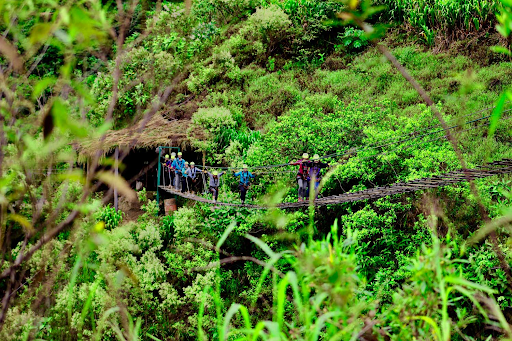
Most Inca Jungle Basic packages also include optional zip-lining across river canyons, which sounds like a tourist add-on but delivers a view of the jungle from above that is simply not available any other way. Hanging on a cable above a green river valley with cloud forest on both sides is one of those small moments that turns out to be genuinely memorable.
The trek ends at Machu Picchu, as it always does, and the arrival feels earned in the way that only arriving on foot can feel. The Inca Jungle Basic gives budget travelers the same destination and much of the same experience as more expensive options, just with simpler places to sleep and a slightly more raw version of the trail. For people who care more about the journey than the pillow, it is the right choice.
Overflight Nazca Lines and Arequipa: The South of Peru Does Its Own Thing
Switch to the southern coast of Peru, and the country shows you something completely different. The Nazca Lines are one of the genuinely mysterious things left in the world, enormous geoglyphs etched into the desert floor that depict animals, plants, and geometric shapes in lines so precise and on a scale so large that they are only fully visible from the air. Nobody knows with complete certainty why they were made. The best theories involve astronomical alignments, ritual purposes, or water worship in a region where water was scarce and precious, but the honest answer is that the purpose is still debated.
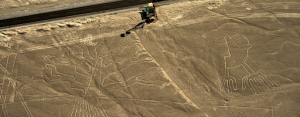
The overflight of the Nazca Lines is the way to see them properly. Small planes take off from the town of Nazca and bank over the desert in long, tilted turns so passengers on both sides of the plane get clear views of the figures below. You see the hummingbird, the monkey with its curled tail, the spider, the condor, and the long straight lines that run for kilometers across the flat desert in directions that have puzzled researchers for decades. From above, the precision of the lines is what strikes you most. The Nazca people drew these without any aerial perspective to guide them, and the results are extraordinary.
From Nazca the route continues to Arequipa, Peru’s second-largest city and one of the most beautiful in the whole country. Arequipa sits in a valley at around 2,300 meters above sea level with three volcanoes visible from the city center, including El Misti, which rises to over 5,800 meters and looks completely picture-perfect with its cone shape and occasional wisps of steam. The city is built largely from a white volcanic stone called sillar, which gives the old center a bright, clean look that is unlike any other city in Peru.
The Santa Catalina Monastery in Arequipa is one of those places that surprises people who are not expecting much. It is a city within a city, a vast walled complex of streets, plazas, and living quarters that housed cloistered nuns for centuries and is now open to visitors. Walking through it takes a couple of hours, and the painted walls, narrow alleys, and quiet courtyards give it a feeling that is peaceful and slightly otherworldly.
Conclusion: The Parts of Peru That Stick With You
The Inca Jungle Basic and the overflight of the Nazca Lines followed by time in Arequipa represent two sides of what makes Peru worth more than a quick visit. One gives you jungle, bikes, zip lines, and a trek to the most famous ruin in South America without requiring a big budget to do it. The other gives you one of the world’s genuine mysteries seen from a small plane banking over the desert, followed by a beautiful colonial city under a volcano.
Neither of these experiences is the thing most people put on their Peru list first. Both of them have a habit of becoming the stories people tell when they get home. That is the thing about this country. The more of it you see, the more you realize the best parts are not always the ones with the longest queues.
Go for the classics if you want, but leave room in your itinerary for the places that catch you off guard. Peru is very good at those.
